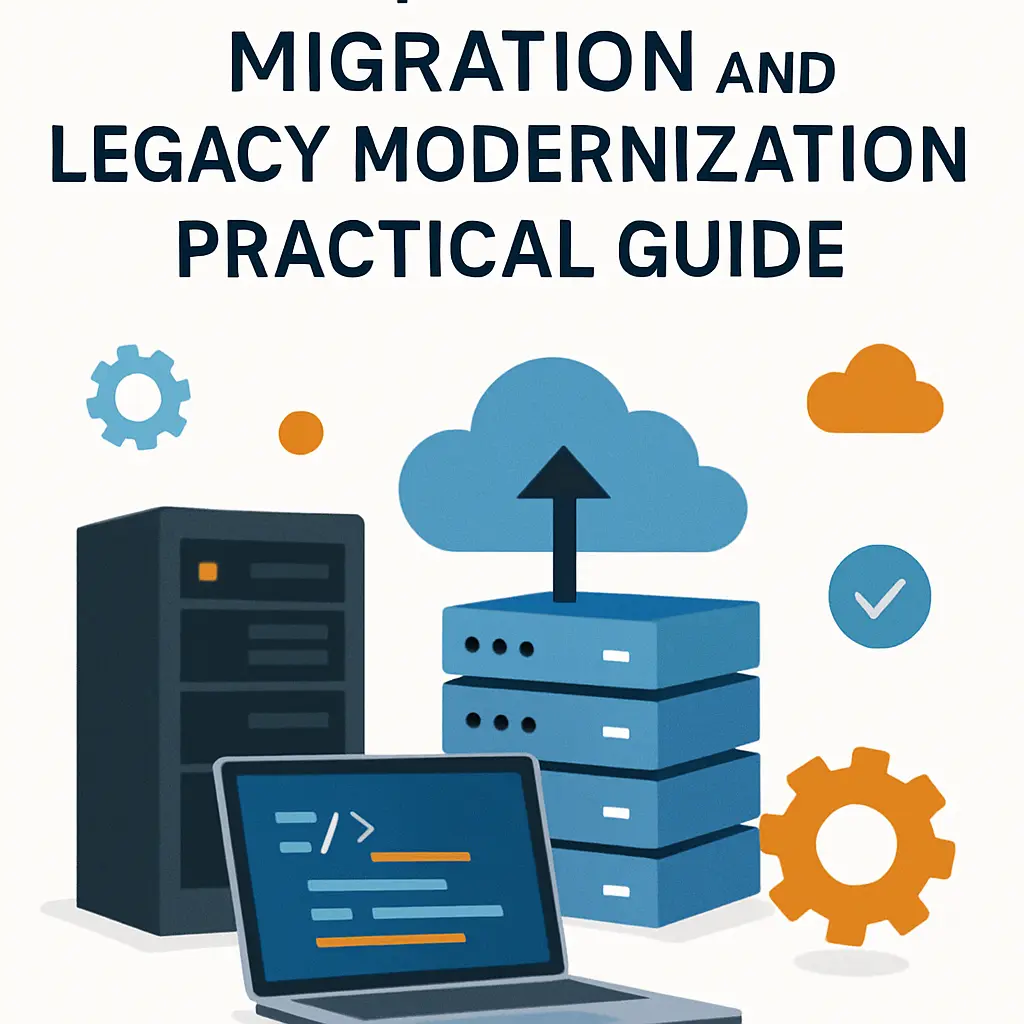
Mainframe Migration and Legacy Modernization: A Practical, SEO-Friendly Guide
Mainframe migration and legacy system modernization are no longer optional projects; they are strategic necessities. Organizations that still rely on monolithic, aging platforms struggle with agility, cost, and skills shortages. This guide explores how to plan and execute mainframe migration, reduce risks, and choose the right modernization partners, so you can transform critical legacy applications without disrupting your business.
Understanding the Mainframe Migration Landscape
The first step in a successful mainframe migration is to understand why you are modernizing and what you are modernizing. Many organizations still depend on COBOL- or PL/I-based systems that have grown for decades through incremental changes, quick fixes, and business-driven extensions. These systems often embody the “truth” of how the business works, even more accurately than scattered documentation.
However, these platforms come with increasing pain points:
- Rising operational costs – Licensing, specialized hardware, and data center overhead for mainframes can be significantly higher than cloud or commodity infrastructure.
- Talent and skills risk – The pool of experienced mainframe developers and operators is shrinking as many retire, making maintenance and enhancement more difficult.
- Innovation bottlenecks – Integrating mainframe applications with modern digital channels, APIs, or analytics tools can be slow and brittle.
- Regulatory and security pressure – New data protection and audit requirements often demand better observability, automation, and fine-grained control than older systems provide.
In this context, mainframe migration is not simply an IT refresh but a business transformation initiative. The modernization path you choose must balance risk, cost, and speed while preserving the core business logic and data that keep your enterprise running.
There are several high-level approaches to mainframe migration:
- Rehosting (“lift-and-shift”) – Moving workloads from a physical mainframe to an emulation environment or cloud infrastructure with minimal code changes.
- Replatforming – Moving to a modern runtime (e.g., Java, .NET, Linux) while preserving much of the application logic.
- Refactoring – Restructuring and partially rewriting code to improve maintainability and modularity, often moving toward microservices or domain-driven architectures.
- Rearchitecting or replacing – Reimagining the system based on modern patterns, or implementing commercial off-the-shelf (COTS) or SaaS solutions for parts of the functionality.
Most real-world modernization programs combine several of these patterns across different applications. For example, you might rehost non-critical batch jobs while refactoring core policy administration or payment systems into services.
Strategic clarity on which applications are candidates for which approach is essential, because every choice has implications for cost, timeline, risk profile, and long-term flexibility.
Key Drivers and Success Metrics
Before you select tools or methods, clarify the business and technical drivers for migration, and define measurable outcomes. Common drivers include:
- Reducing annual run-rate costs for infrastructure and software.
- Enabling faster release cycles and digital product innovation.
- Improving resilience, observability, and disaster recovery.
- Unifying data for analytics, AI/ML, and regulatory reporting.
- Mitigating skills risk and vendor lock-in.
Translate these into specific metrics, such as:
- Percentage reduction in infrastructure and licensing costs within two years.
- Improvement in deployment frequency (e.g., from quarterly to monthly releases).
- Reduction in mean time to recovery (MTTR) for critical services.
- Number of manual processes eliminated or automated.
- Target decommissioning date for the physical mainframe platform.
These metrics guide trade-offs during the project and help maintain alignment between IT and business leadership. Without them, modernization easily devolves into a purely technical exercise with unclear value.
Identifying and Addressing Common Mainframe Migration Challenges
Even with clear goals, mainframe migration can be risky if you underestimate its complexity. You must identify potential obstacles early and plan mitigations. An excellent starting point is to study best practices on How to Identify and Overcome Common Challenges in Mainframe Migration, then tailor those insights to your environment.
Typical challenges include:
- Incomplete system knowledge – Over time, documentation becomes outdated while business logic remains trapped in code and job control scripts.
- Highly coupled architectures – Tight coupling between modules, databases, batch jobs, and external interfaces makes it difficult to isolate components for phased migration.
- Data complexity and quality issues – Multiple formats (VSAM, IMS, DB2), historical data inconsistencies, and obscure business rules embedded in data transformations.
- Performance and latency concerns – Mainframes excel at high-throughput, low-latency batch and transaction processing; replicating this on distributed platforms may require careful design.
- Regulatory and audit constraints – Any change to core systems must maintain traceability, compliance, and security controls.
- Cultural resistance and change management – Long-tenured staff may be hesitant to change tools or processes, slowing adoption of new platforms.
The solution is a systematic discovery and analysis phase. Use automated tools to scan code, JCL, utilities, screen definitions, and database schemas. The goal is to build an application inventory, dependency maps, and a functional decomposition. Combine these with interviews from business SMEs and operations teams to capture tacit knowledge.
This discovery effort often reveals hidden dependencies, undocumented interfaces, and technical debt hotspots. It also helps segment applications into logical domains and prioritize them for migration based on value, risk, and dependency chains.
Designing the Target Architecture
With a clear understanding of your current landscape and challenges, you can define a target architecture that supports your business strategy. For many organizations, this means:
- Adopting a cloud-native or hybrid cloud model for compute, storage, and networking.
- Standardizing runtimes (e.g., Java, .NET, Node.js) and frameworks to simplify operations.
- Breaking monoliths into service-oriented or microservices architectures where it adds value.
- Implementing robust API gateways and event-driven integration layers.
- Centralizing logs, metrics, and traces for observability and security analytics.
You do not need to achieve full microservices from day one. For many organizations, a pragmatic, incremental approach works best: start with macroservices (larger functional components), introduce APIs around key business capabilities, and gradually refine boundaries as you learn from production behavior.
This target architecture should be tightly coupled with non-functional requirements such as fault tolerance, recovery objectives (RPO/RTO), data residency, and security posture. Map these requirements to specific patterns like blue-green deployments, canary releases, immutable infrastructure, encryption standards, and zero-trust networking.
Migration Roadmapping and Phased Delivery
A comprehensive migration roadmap is essential to manage risk and maintain business continuity. Rather than a “big bang” cutover, most organizations benefit from phased delivery that aligns with business cycles and risk tolerance.
Key steps in roadmapping include:
- Grouping applications into waves based on dependencies, business priority, and complexity.
- Identifying quick wins such as peripheral batch processes or reporting modules that can be moved early to demonstrate value.
- Defining clear exit criteria for each wave (e.g., successful parallel run, performance benchmarks met, user acceptance confirmed).
- Planning for coexistence where mainframe and modern platforms run side by side, with data synchronization and API-level integration.
- Sequencing critical systems so that dependent applications have the necessary services available at each stage.
Phasing allows you to learn from each wave, refine your tooling, and improve processes before tackling the most critical systems. It also makes it easier to manage organizational change because teams adapt incrementally to new technologies and workflows.
Testing, Validation, and Risk Mitigation
Testing in mainframe migration is not just about functional correctness; it must cover performance, data integrity, compliance, and operational readiness. Underestimating testing is one of the most common causes of delays and post-migration issues.
Effective testing strategies include:
- Comprehensive test data management – Create anonymized, representative datasets that capture edge cases, historical records, and high-volume scenarios.
- Automated regression suites – Ensure that migrated components behave consistently with the legacy system across a wide range of transactions and scenarios.
- Performance and load testing – Validate that the new platform meets or exceeds the mainframe’s throughput and latency for peak loads and batch windows.
- Parallel runs – Run new and old systems side by side for a defined period, comparing outputs and behaviors to build confidence before cutover.
- Disaster recovery and failover drills – Demonstrate that backup, restore, and failover processes meet your resilience targets.
Risk mitigation also involves robust change management: clear rollback plans, staged rollouts, frequent checkpoints with stakeholders, and transparent communication about timing and impacts. A strong governance framework ensures that technical decisions are aligned with compliance and business risk appetites.
Operational Transformation and Skills
Modernizing a mainframe is not just a technology change; it transforms how your teams work. DevOps practices, infrastructure-as-code, automated CI/CD pipelines, and cloud operations require new skills and mindsets.
To support this transition:
- Invest in training and upskilling legacy teams on new languages, platforms, and tooling.
- Pair experienced mainframe experts with cloud engineers and architects to cross-pollinate knowledge.
- Redesign operating models and processes to favor automation, continuous improvement, and shared responsibility for reliability.
- Update runbooks, incident management procedures, and support models to reflect the new environment.
If you neglect the human and operational side of modernization, you risk simply moving legacy complexity into a new platform. Successful programs treat cultural and skills evolution as first-class objectives.
Choosing the Right Legacy Modernization Partners
Given the scale and risk of mainframe migration, most enterprises look for external partners with proven experience, specialized tooling, and industry-specific knowledge. The challenge is not just finding vendors who can write code, but selecting those who can help shape strategy, manage risk, and share accountability for outcomes.
When you evaluate the best companies for legacy system modernization, consider several dimensions:
- Domain expertise – Have they successfully modernized systems in your industry (banking, insurance, healthcare, manufacturing, government)? Regulations and patterns vary widely by sector.
- End-to-end capabilities – Do they offer discovery, architecture, migration execution, testing, DevOps enablement, and post-go-live support, or only niche services?
- Methodology and frameworks – Look for structured modernization playbooks, reference architectures, and repeatable patterns rather than ad hoc approaches.
- Tooling and automation – Code analysis, conversion, refactoring, test automation, and deployment tools can dramatically reduce risk and timelines.
- Co-creation and knowledge transfer – Ensure they build your internal capabilities instead of creating new dependencies or lock-in.
- Security and compliance posture – Verify their track record with regulated environments, data protection standards, and auditability.
Strong partners will challenge your assumptions constructively, help refine your roadmap, and provide realistic estimates rather than optimistic sales pitches. They should also be comfortable working in a multi-vendor ecosystem, coordinating with your cloud providers, internal teams, and other integrators.
Governance, Funding, and Stakeholder Alignment
Legacy modernization often spans multiple years and business cycles. Sustained executive sponsorship and disciplined governance are essential to keep the program funded and aligned with strategy.
Effective governance structures typically include:
- An executive steering committee representing business, IT, risk, and finance, meeting regularly to review progress and approve major decisions.
- A program management office (PMO) to coordinate roadmaps, dependencies, and budgets across multiple workstreams.
- Architecture and security boards to enforce standards, validate design decisions, and prevent fragmentation.
- Continuous value tracking – Regular reporting on KPIs and realized benefits (cost savings, uptime improvements, faster releases, new capabilities).
From a funding perspective, you may need to shift from purely capital-expenditure projects to blended CapEx/OpEx models, especially when moving to cloud-based services. Building strong financial business cases with clear ROI timelines helps secure ongoing investment.
Modernization as an Ongoing Capability
Finally, recognize that modernization is not a one-time event. Even after you fully decommission the mainframe, applications and platforms will continue to evolve. Successful organizations treat modernization as an ongoing capability – an institutional skill to continuously adapt technology to changing business and regulatory environments.
This mindset leads to practices such as:
- Regularly reviewing application portfolios for consolidation, retirement, or enhancement opportunities.
- Maintaining up-to-date architecture diagrams and domain models as living artifacts.
- Embedding modernization epics into product roadmaps instead of treating them as separate, episodic projects.
- Investing consistently in automation, observability, and platform engineering to keep the new landscape manageable.
In this way, your mainframe migration becomes the catalyst for a broader transformation toward more adaptable, resilient, and innovative IT.
Conclusion: Turning Mainframe Migration into Strategic Advantage
Mainframe migration and legacy system modernization are complex but highly rewarding when approached methodically. By understanding your existing landscape, defining clear value-driven goals, addressing common challenges head-on, and designing a pragmatic target architecture and roadmap, you reduce risk and maximize impact. The right partners, governance, and cultural change turn modernization into a continuous capability, positioning your organization to innovate faster and compete more effectively in a digital-first world.